
Album Review–Standing Near Infinity
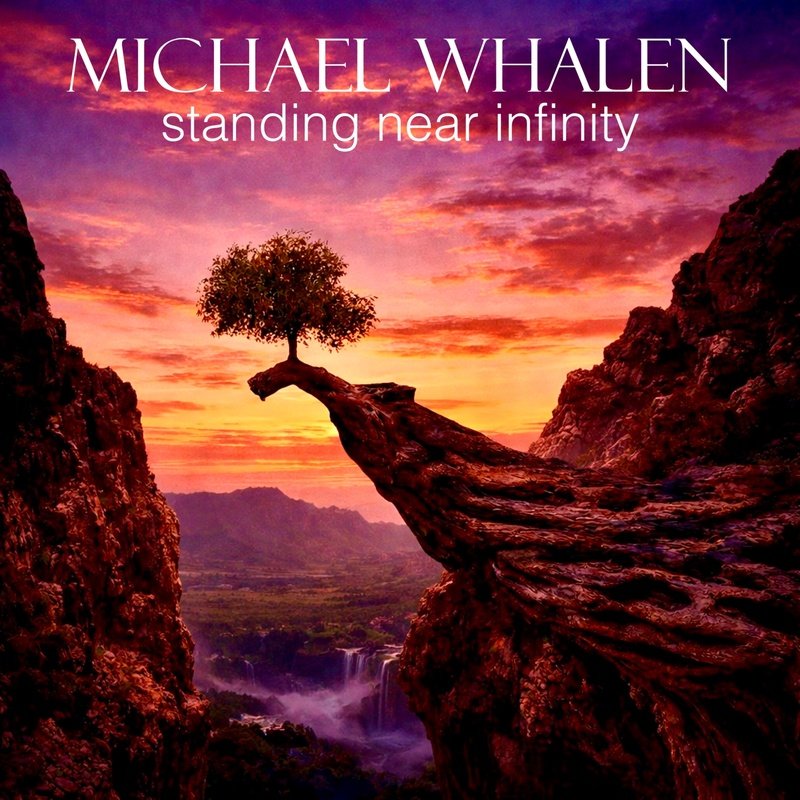
Standing Near Infinity: Michael Whalen Completes His Ambient Vision
In contemporary instrumental music, few artists manage to create albums that feel both immersive and emotionally grounded. Michael Whalen’s Standing Near Infinity, released on June 5, 2026, achieves precisely that balance. Rooted in ambient, electronic, and contemporary instrumental traditions, the album offers more than a sequence of compositions. It presents an expansive listening experience shaped by atmosphere, reflection, and cinematic imagination. For listeners devoted to ambient and new age music, this release carries special importance because it completes the electronic and ambient triptych Whalen began with Sacred Spaces in 2020 and continued with Imaginary Trains in 2022.
Rather than revisiting familiar ideas, Standing Near Infinity expands and refines Whalen’s evolving sonic language. Luminous synthesizers, spacious melodies, and carefully sculpted textures create music that feels suspended between intimacy and vastness. At a time when much digital music chases immediacy, Whalen embraces patience and emotional depth, inviting listeners into a world where sound becomes atmosphere and atmosphere becomes experience.
Michael Whalen and His Expanding Legacy
Michael Whalen’s career reflects an unusual blend of artistic ambition and professional achievement. A two time Emmy Award winning composer, producer, music supervisor, and recording artist, he has contributed to more than 850 television and film scores, thousands of commercials, and projects connected with HBO, Netflix, PBS, and ABC’s Good Morning America. His work with major companies such as Universal, Sony, Warner, and Real Music further confirms his standing within the music industry.
Yet Whalen’s recent years have revealed an equally compelling dimension of his artistry through an increasingly prolific recording career. With fifty three solo and soundtrack albums and more than 1.5 billion global streams, he has built a body of work that reaches audiences far beyond traditional soundtrack circles. Albums such as Walk in Beauty, Watercolor Sky,Like the Night, and When the Rain Learned to Sing showcase his stylistic range, while the remarkable popularity of “I Have Loved You for a Thousand Lifetimes” demonstrates his gift for emotionally resonant instrumental music. Standing Near Infinity emerges naturally from this creative journey, connecting Whalen’s cinematic instincts with his deeply personal musical voice.
The Architecture of a Sonic Triptych
Standing Near Infinity gains additional depth through its role as the concluding chapter of Whalen’s ambient trilogy. Sacred Spaces introduced a contemplative sound world celebrated for its spiritual atmosphere and expansive electronic textures. Imaginary Trains expanded that language through movement and momentum, drawing inspiration from pioneers such as Tangerine Dream, Vangelis, Klaus Schulze, and Kraftwerk while maintaining Whalen’s melodic identity.
This new album brings those artistic threads together with maturity and confidence. Composed, produced, performed, and mixed by Whalen, the recording incorporates synthesizers, Rhodes, organ, Wurlitzer, acoustic piano, guitars, percussion, processed vocals, and extensive sound design, later mastered by Tom Eaton. These elements are not used for technical display alone. Instead, they create emotional architecture, shaping music that feels simultaneously earthbound and cosmic. The album unfolds with deliberate pacing, encouraging uninterrupted listening and rewarding immersion.
Journey Through the Tracks
In The Open Air
Opening the album with quiet assurance, In The Open Air establishes the spacious mood that defines the journey ahead. The composition feels welcoming rather than dramatic, introducing Whalen’s electronic palette with restraint and clarity. There is an immediate sense of openness here, as though the listener has stepped beyond enclosed spaces into wider emotional terrain.
Love, Unspoken
Love, Unspoken turns inward, exploring emotional communication beyond words. The track relies on atmosphere and melodic sensitivity rather than overt sentimentality. Whalen allows feeling to emerge gradually, creating a reflective piece that feels intimate without becoming fragile or overly romantic.
Out Of Body
With Out Of Body, the album enters more exploratory territory. Dreamlike textures and spacious electronic layering evoke altered perspective and suspension. Rather than following conventional structure, the track unfolds patiently, encouraging listeners to experience sound as environment rather than destination.
As One
Warm and quietly uplifting, As One introduces a sense of connection within the album’s introspective landscape. Melody and ambience remain carefully balanced, producing music that feels inclusive and emotionally centered. The composition reflects unity not through grandeur but through gentle coherence.
Standing Near Infinity
The title track stands as the album’s emotional and conceptual core. Here, Whalen approaches infinity not as abstraction but as lived emotional experience. The composition carries a measured grandeur that inspires wonder without theatrical excess, capturing the album’s central dialogue between intimacy and vastness.
The Sky Opens Its Eyes
Among the album’s most cinematic moments, The Sky Opens Its Eyes evokes revelation and shifting perspective. Whalen’s background in visual media becomes especially apparent as the music unfolds with painterly elegance, suggesting distant horizons and unfolding light.
Soft Geometry
Soft Geometry balances precision with warmth. While the title hints at structure and pattern, the music resists rigidity, blending carefully designed electronic textures with emotional fluidity. The result feels both thoughtfully constructed and organically expressive.
The Space Between Hours
Stillness becomes the central theme of The Space Between Hours. Rather than emphasizing movement, the track explores pause and suspension, drawing attention to emotional spaces often overlooked. Its contemplative atmosphere exemplifies ambient music’s ability to reshape our relationship with time.
The Inner Flame
The Inner Flame introduces quiet emotional intensity. Through understated melodies and carefully layered textures, Whalen evokes resilience and inward illumination. The composition feels affirming without becoming dramatic, sustaining the album’s reflective spirit while deepening its emotional warmth.
Driftwood
Closing the album with grace, Driftwood offers gentle resolution rather than finality. The title suggests memory, passage, and transformation, and the music follows that emotional trajectory beautifully. Instead of dramatic closure, Whalen leaves listeners with lingering resonance and reflective calm.
Take Away
What impresses most about Standing Near Infinity is its refusal to choose between atmosphere and emotional substance. Michael Whalen understands that ambient music can be immersive without becoming distant and cinematic without sacrificing intimacy. This album completes his electronic and ambient triptych with artistic conviction, bringing together the spiritual spaciousness of Sacred Spaces and the forward motion of Imaginary Trains into a unified and deeply personal statement.
For readers who appreciate contemporary instrumental music shaped by imagination, emotional intelligence, and refined sound design, Standing Near Infinity deserves close attention. It is not merely an ambient album but an invitation into reflection, atmosphere, and carefully crafted sonic storytelling. Michael Whalen has completed his ambient vision with confidence and grace, and the result stands among his most thoughtful and compelling works.
 Album Review—Waiting For Today
  Album Review—What the Elephant Told
  Album Review—In The Stillness Of The Stars
  Album Review—Fractured Reflections
  Album Review—Light, Remembered
  Album Review—A Sky That Knows Our Names
It’s a wonderful place to discover new artists, or just stay up to date with the latest news from those musicians you already know.
Greetings from Spain………
Juan Herrero