
Interview with Bei Bei–The Guzheng in the Present Moment
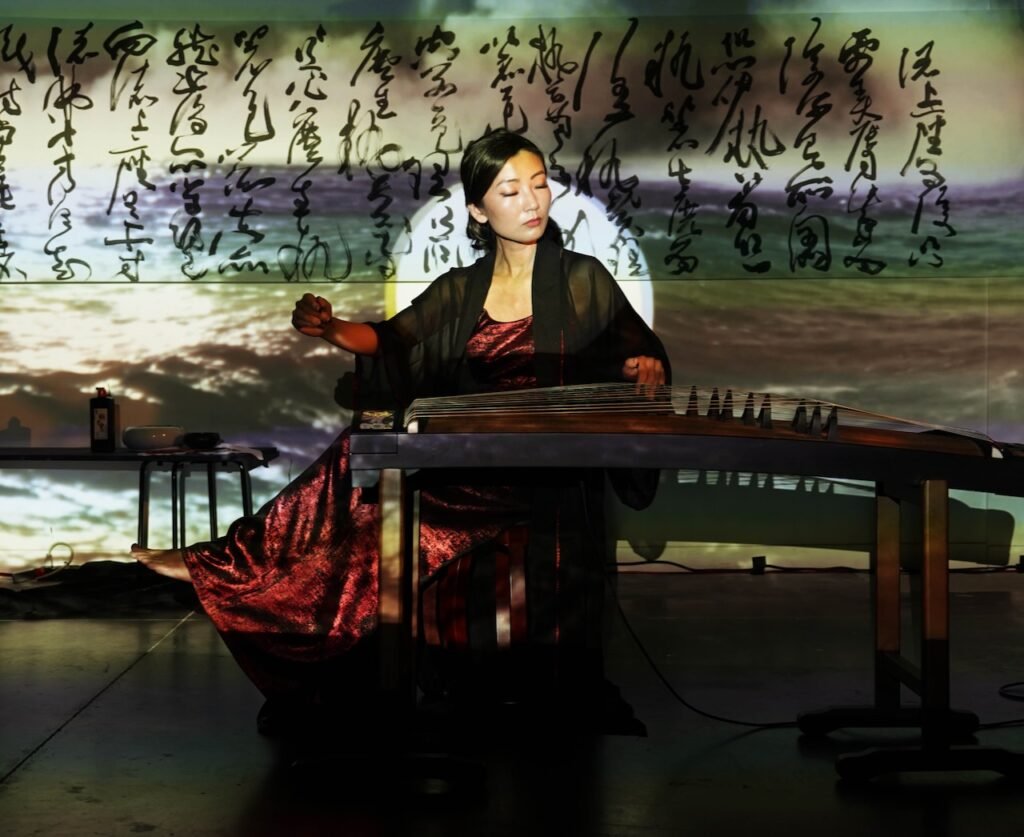
From mastering one of China’s oldest and most expressive instruments to redefining its place in contemporary global music, Bei Bei has built a career that bridges tradition and innovation. In this interview, she reflects on her musical journey—from discovering the guzheng as a child to collaborating across cultures, embracing improvisation, and creating her latest album, Two Moons. She shares how personal experiences, artistic curiosity, and a deep respect for heritage continue to shape her distinctive voice and inspire audiences around the world.
- You began playing the guzheng at a very young age. What first inspired you to choose this instrument, and how did it shape your early musical foundation?
I was six years old when I first saw the guzheng, and I fell in love with it at first sight. There was something about its elegant shape and beautiful, expressive sound that immediately captivated me. From that moment, I knew I wanted to learn it. Looking back, growing up with the guzheng gave me much more than technical training. It taught me discipline, patience, and how to express emotions through music. Those early years built the musical foundation that still shapes everything I create today, even though my music has evolved far beyond the traditional repertoire.
- Moving from China to building a career internationally is a big transition. How did that journey influence your sound and artistic vision?
Moving to the United States completely changed my perspective as an artist. I came here to study music recording and music business, and through collaborating with musicians from many different backgrounds, I realized that music isn’t about fitting into genres or cultures—it’s about genuine human connection. Instead of asking, “How do I play traditional Chinese music?” I started asking, “What do I want to express?” That shift gave me the freedom to let the guzheng become my own voice. Today my music is deeply rooted in Chinese tradition, but it’s also shaped by all the people, cultures, and experiences I’ve encountered along the way.
- You are known for blending traditional guzheng with jazz and contemporary music. What motivated you to experiment beyond classical forms?
I never set out to break tradition or modernize the guzheng. I was simply curious about what else this instrument could say. After moving to the United States, I studied jazz, collaborated with musicians from many different backgrounds, and discovered new ways of thinking about rhythm, harmony, and improvisation. Instead of leaving tradition behind, I found that these experiences actually deepened my understanding of it. Today, I see tradition and innovation as complementary—they inspire and strengthen each other.
- Was there a turning point or breakthrough moment in your career that gave you confidence to pursue music globally?
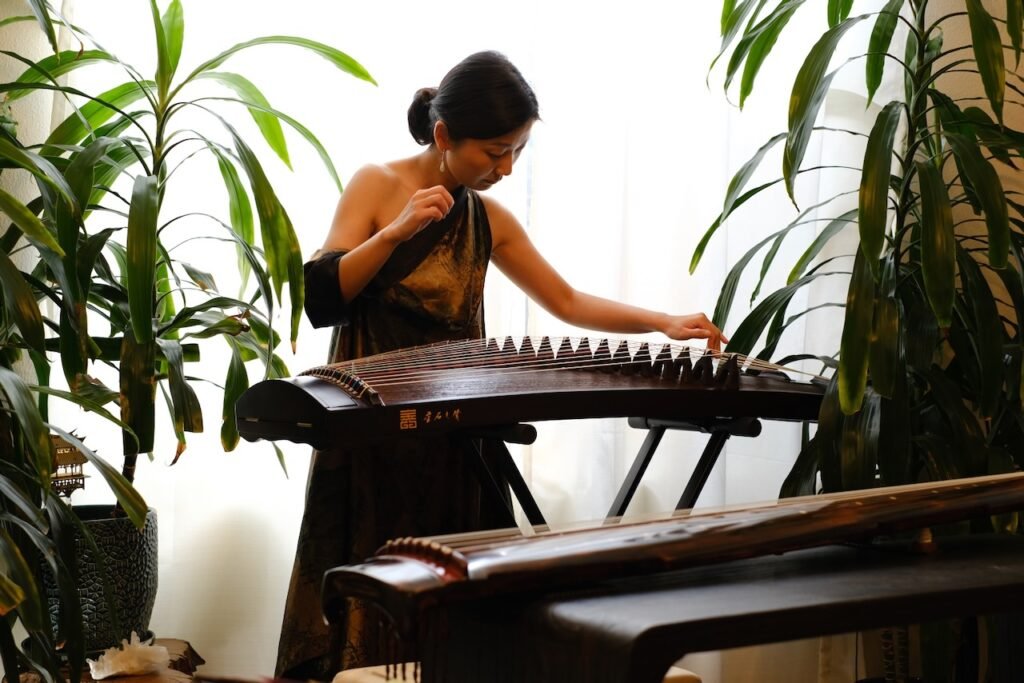
People often ask what my big breakthrough was, but honestly, there wasn’t a single defining moment. It was a series of small opportunities built over many years. After moving to the United States, I had actually stopped playing the guzheng for a while after losing an international competition. It wasn’t until I started playing again in college and even busking on the streets of Pasadena that I rediscovered my confidence. Every performance, collaboration, and challenge led to the next opportunity. Looking back, I realize that persistence—not one breakthrough—is what built my career.
- As someone representing a traditional instrument on international stages, how do you balance cultural authenticity with innovation?
I don’t see authenticity and innovation as opposites. For me, innovation begins with a deep respect for tradition. The more I understand the history, philosophy, and language of the guzheng, the more naturally I can express my own voice through it. I’m not trying to make the instrument sound modern—I’m simply allowing it to continue evolving, just as every musical tradition has throughout history. I believe authenticity comes from being honest about who you are, while honoring where you come from.
- Over the years, how has your creative process evolved — both as a composer and performer?
When I was younger, I focused on playing the notes as accurately and beautifully as possible. Over time, my focus shifted from perfection to expression. As both a composer and performer, I’m now more interested in creating meaningful experiences than simply presenting polished performances. Improvisation has become a big part of my creative process because it allows me to be fully present, to listen deeply, and to respond honestly in the moment. I think that’s where my most authentic music comes from.
- Turning to your newest album, Two Moons — what inspired the concept behind this project?
Two Moons actually didn’t begin with a concept. It started with a simple creative goal—to explore what the guzheng could sound like in an electronic music setting with my collaborator Paul Elliott. The title came later. On the night of the Mid-Autumn Festival in 2024, after we had been improvising over one of the tracks, I looked out the window and saw the full moon and its reflection in the glass. There were two moons. That image became the title of the piece, and over time it grew into the album’s central theme of duality—tradition and innovation, East and West, the physical and the spiritual.
- The title Two Moons is beautifully symbolic. What does it represent in terms of your personal journey or musical expression?
To me, Two Moons is a reminder that two seemingly opposite things can exist at the same time. Throughout my life, I’ve often found myself between two worlds—East and West, tradition and innovation, composition and improvisation. At first, I thought I had to choose one or the other. But over time, I realized those opposites actually complement each other. Just like the moon and its reflection, they are different, yet they belong together. That’s what Two Moons represents for me—embracing both sides as part of a whole.
- How does Two Moons differ from your earlier work in mood, sound, or storytelling?
Two Moons feels like the most complete expression of who I am as an artist today. My earlier projects often explored different musical directions separately, but on this album everything comes together naturally—traditional Chinese instruments, electronic sound design, improvisation, and cinematic storytelling. It’s also much more spacious and meditative. Instead of focusing on technical virtuosity, I wanted to create an immersive listening experience that invites people to slow down, reflect, and use their own imagination.
- Looking ahead, what new directions or collaborations are you excited to explore in your musical journey?
I’m excited to continue exploring music as a bridge between different art forms and cultures. Beyond creating new albums, I want to develop more improvised live performances and interdisciplinary experiences that combine music with movement, visual art, poetry, and storytelling. I’m also looking forward to collaborating with artists from different backgrounds and disciplines, because those conversations often lead to the most unexpected and meaningful discoveries. More than anything, I hope to keep creating music that invites people to slow down, reconnect with themselves, and experience a deeper sense of presence.
 Interview With Sherif Dahroug
  Interview with Eva James–Struggle and Triumph
  Interview with Michael Whalen–Creating Music as a Mode of Self-Expression
  Interview with Ronald Van Deurzen–A Pianist Who Wears Many Hats
  Interview With Time Traveler aka Eleon–A Fresh Perspective to Electronic Music
  Interview With Christel Veraart Regarding her Newest Album: Pleiades
  Album Review—Journey
  Album Review—Aphelion
  Album Review—Surrender
  Album Review—Waiting For Today