
Album Review—Aphelion
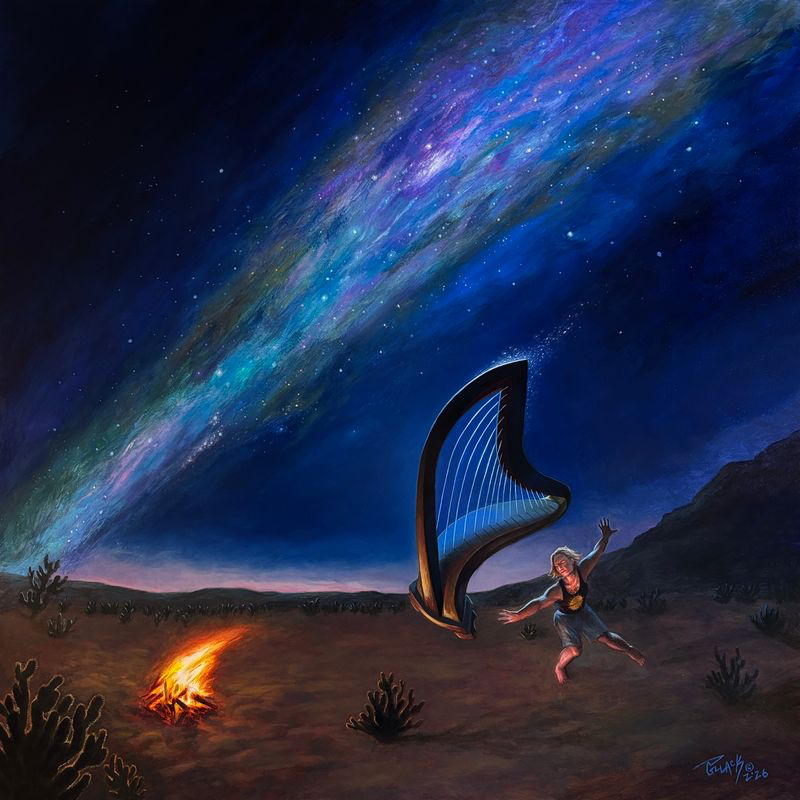
Aphelion: A Musical Journey Through Distance, Loss and Renewal
April Stace begins Aphelion from a place that many people eventually encounter in life: the unfamiliar distance that appears when something once central to our existence has changed. For Stace, that distance emerged through divorce, an empty nest and a solitary journey through New Mexico. From those experiences comes an album that turns solitude, loss, uncertainty and renewal into a deeply personal musical journey. The title provides the album with its central metaphor. In astronomy, aphelion is the point in an orbit at which a body is farthest from the sun. Stace transforms that scientific idea into an emotional one. Distance can feel like isolation, but it can also create the space in which new ways of seeing and being become possible. Aphelion explores precisely that territory.
A Harp at the Centre
April Stace is particularly well placed to explore such themes. She is a harpist, composer, writer, Episcopal priest and professor of practical theology, with more than two decades of experience in ministry, teaching and the arts. Her artistic and spiritual interests converge around questions of attention, wonder, grief, beauty and what it means to become more fully alive. The harp remains central throughout Aphelion, but Stace does not confine it to traditional expectations. The album moves between intimate harp passages and layered arrangements drawing on contemporary classical, ambient, jazz and world-music influences. The result is a genre-blurring collection in which the harp becomes both an ancient voice and part of a contemporary musical landscape.
From Intuition to Little Steps
The fourteen-track sequence begins with “Intuition,” a concise opening that immediately suggests an inward journey. Its title points towards a form of knowing that comes before explanation, an appropriate starting point for an album concerned with navigating unfamiliar territory. “ Holding onto Winter” follows with an evocative image of stillness and endurance. Winter can suggest loneliness or dormancy, but it is also temporary. Rather than rushing away from difficult emotions, the album appears willing to remain with them.
“Train Song” introduces movement, naturally echoing the idea of travel that runs through Stace’s personal story. Then comes “Writing Again,” a particularly meaningful title from an artist who is also a writer. After disruption, recovering one’s creative voice can itself become a form of renewal. “Little Steps” continues that idea. Beginning again rarely happens through one dramatic transformation. More often, it happens gradually, through small decisions and quiet movements forward. The title captures that understated courage.
Landscape, Memory and Attention
“Rice’s Hill,” “Garden” and “Ojito” widen the album’s world through place and landscape. This is especially meaningful in the context of Stace’s transformative journey through New Mexico. The album increasingly feels like a movement between inner states and remembered landscapes. “Darkness A Gift” is one of the collection’s most intriguing titles. The phrase challenges the instinct to see darkness merely as something to escape. If darkness can become a gift, then solitude, uncertainty and grief can also reveal things that comfort and certainty sometimes conceal. That perspective helps define the album’s approach to transformation. Renewal does not require denying what has been painful. It can begin by learning to look at that experience differently.
Souvenir, Wild Patience and Rainbow
“Souvenir” introduces the idea of memory. A souvenir is something carried away from a place or experience, allowing the past to remain present. In an album shaped partly by travel, the title feels particularly appropriate. “Wild Patience” brings together two seemingly contrasting ideas. Patience suggests waiting, while “wild” suggests freedom and unpredictability. Together, they evoke a kind of waiting that remains alive to possibility. Then comes “Rainbow,” another natural image of transition and hope. Its position within the album’s broader emotional journey is significant. The rainbow does not erase the rain that came before it; its meaning depends upon it.
Divertissement and the Final Journey
“Divertissement” introduces a lighter and more playful possibility late in the sequence. After an album concerned with grief, solitude and transformation, the presence of diversion and delight is welcome. Healing need not remain permanently solemn; there must also be room for curiosity, beauty and freedom. The album closes with its longest composition, “Aphelion / Trisagion,” at 7:40. The title brings together the album’s central astronomical metaphor with a word associated with Christian liturgical prayer. Given Stace’s identity as an Episcopal priest, this combination adds a distinctly sacred dimension to the album’s conclusion. By this point, the journey has travelled through intuition, winter, movement, creativity, landscape, darkness, memory, patience and hope. The final title therefore feels less like a destination than a gathering together of the album’s different strands.
Beyond a Traditional Harp Album
One of Aphelion’s strongest artistic ideas is its refusal to treat the harp as a limitation. Its ancient resonance remains at the heart of the music, while contemporary classical, ambient, jazz and world-music influences broaden its possibilities. That musical openness mirrors the album’s emotional concerns. Grief, spirituality, memory and renewal rarely exist in separate compartments. A memory can be painful and beautiful at the same time. Solitude can be lonely and liberating. Distance can represent loss while creating the space needed for transformation. In this sense, the album’s form and subject belong together.
Music as a Form of Attention
Aphelion also carries an invitation to slow down. Stace describes the record as one for close, patient listening, and that quality fits naturally with her interest in attention, wonder and beauty. In a culture increasingly dominated by speed and distraction, patient listening can itself become a meaningful experience. The album encourages an awareness of the quieter spaces in which reflection becomes possible. This is where Stace’s different identities converge most naturally. The musician, writer, priest and teacher are not separate voices competing within the project. They become different ways of approaching questions about loss, meaning, beauty and becoming.
A Personal Story with Wider Resonance
Although Aphelion emerges from Stace’s personal experience, its themes reach well beyond her particular circumstances. Divorce, children leaving home, solitude, changing identities and unexpected new beginnings are experiences that many people encounter in different forms. The album’s central metaphor therefore has a wider resonance. Being far from the familiar can initially feel like deprivation, but an orbit continues even at its most distant point. Aphelion is not the end of the journey; it is one position within a larger movement. That gives the album its quiet sense of hope. It does not promise that difficult experiences simply disappear. Instead, it suggests that distance, uncertainty and solitude can sometimes become the conditions from which a new way of living emerges.
Take Away
April Stace’s Aphelion transforms the harp into a vehicle for reflection, memory and renewal. Across fourteen tracks, it moves through intuition, winter, travel, creativity, landscape, darkness, patience, hope and spiritual contemplation. What makes the album distinctive is the meeting of several worlds within one artistic vision: contemporary music and ancient resonance, personal loss and spiritual inquiry, composition and writing, ministry and artistic exploration. At its heart, Aphelion is an album about what can happen when life carries us away from what once felt familiar. Its answer is neither despair nor easy optimism. Instead, it finds possibility in the distance itself—the possibility of listening more closely, seeing differently and discovering that a faraway place can sometimes become the beginning of a new journey.
 Album Review—Surrender
  Album Review—Waiting For Today
  Album Review—What the Elephant Told
  Album Review—In The Stillness Of The Stars
  Album Review—Fractured Reflections
  Album Review—Light, Remembered
  Album Review—Aphelion