

Album Review—AZADI Songs of Freedom
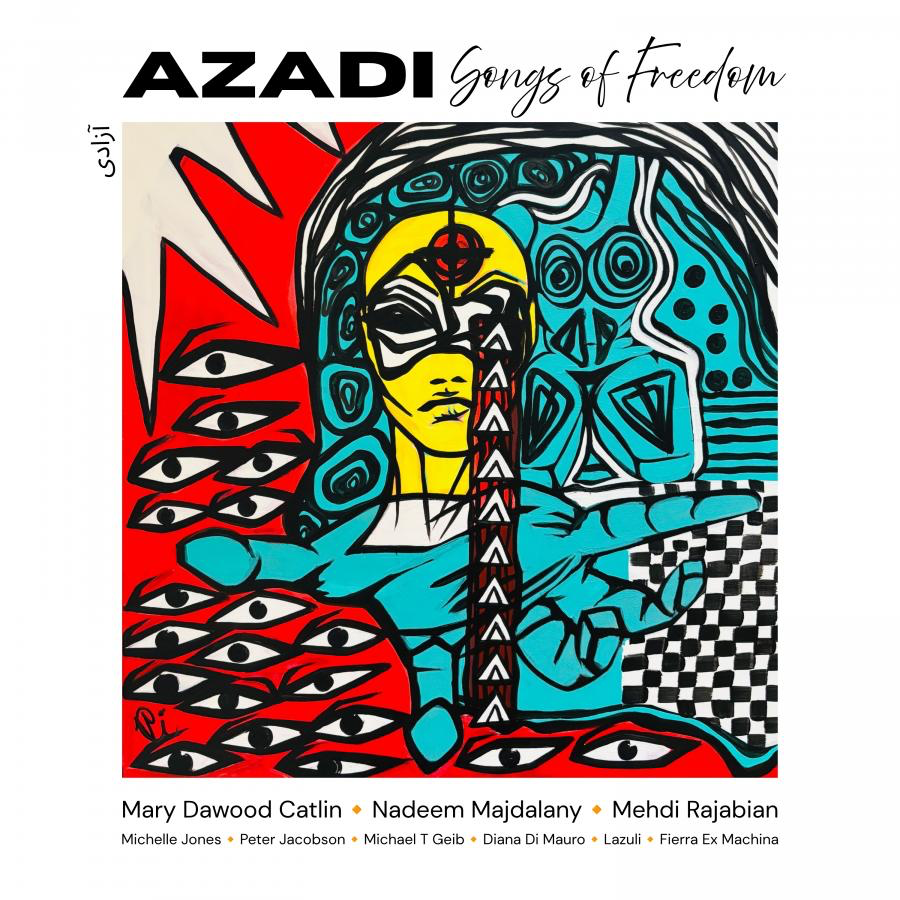
AZADI Songs of Freedom – When Music Becomes a Voice for Freedom
There are albums created simply to entertain, albums that explore a particular musical idea, and albums that carry a purpose larger than music itself. AZADI Songs of Freedom belongs to the third category. This five track EP brings together an international collective of musicians, composers, producers, engineers and human rights advocates around one powerful conviction: freedom is an unalienable human right, and no human voice should be silenced.
Released on August 21, 2026, AZADI Songs of Freedom brings together artists from the United States, Canada, Iran, Chile, Portugal and India. “Azadi” means “freedom” in Farsi, and the word provides the emotional foundation for the project. Across five contemporary classical compositions and 25 minutes and 34 seconds of music, the album moves through memory, sorrow, wounds, resistance and hope. Its message carries particular weight because some contributors have themselves experienced repression, torture, sexual brutality and violence. For them, freedom is not an abstract theme but something deeply personal.
A Musical Meeting of Cultures and Experiences
At the heart of AZADI are Grammy nominated pianist, composer and producer Mary Dawood Catlin and Iranian composer, producer and human rights activist Mehdi Rajabian. Catlin composed “Free Cypress, Bird of Dawn” and “An Elegy for Yesterday,” while Rajabian composed “Winds, Wounds & Silent Names” and “Where Sorrow Dances.” They joined conductor and composer Nadeem Majdalany in creating “The Horizon Bore Witness,” with Lazuli contributing co composition and arranging throughout the five works.
The music combines contemporary classical composition with Persian musical influences, drawing on piano, strings, soprano, percussion, prepared piano, programming and sound design. The resulting soundscape is serious and contemplative, but never without a sense of possibility. Rather than forcing its message upon the listener, AZADI allows its themes to emerge through atmosphere, titles, instrumentation and the emotional progression of the compositions.
Five Tracks, Five Shades of Freedom
Free Cypress, Bird of Dawn — 6:08
“Free Cypress, Bird of Dawn,” composed by Mary Dawood Catlin, opens the EP with an evocative image of endurance and awakening. The cypress suggests rootedness and remembrance, while the bird of dawn suggests movement toward a new beginning. As an opening statement, the piece establishes the reflective character of the album and prepares the listener for a journey in which freedom is understood not merely as escape, but as the possibility of renewal.
An Elegy for Yesterday — 5:20
“An Elegy for Yesterday,” also composed by Catlin, turns naturally toward memory. Its title immediately suggests loss and remembrance, and within the context of the album it becomes a meditation on what oppression can take away from individuals and communities. The piece gives the EP an important emotional dimension: the struggle for freedom is not only about looking toward a better future, but also about remembering what has been lost along the way.
Winds, Wounds & Silent Names — 4:57
With “Winds, Wounds & Silent Names,” Mehdi Rajabian brings an especially personal dimension to the project. The striking combination of “winds,” “wounds” and “silent names” evokes movement, suffering and voices that have gone unheard. Given Rajabian’s own history of authoritarian repression, the composition carries a strong sense of lived experience. It feels like a musical remembrance of people whose stories may have been suppressed but whose presence cannot simply be erased.
The Horizon Bore Witness — 6:17
“The Horizon Bore Witness,” the longest composition on the EP, is a collaborative work by Rajabian and Catlin, with Nadeem Majdalany as co composer and Lazuli contributing to its composition and arrangement. Its title expands the album’s emotional horizon, suggesting that truth and memory can outlast the circumstances that attempt to suppress them. The combination of contemporary classical elements, prepared piano, percussion, strings and sound design gives the piece a broad expressive space and makes it one of the album’s central musical statements.
Where Sorrow Dances — 2:51
The EP closes with Rajabian’s “Where Sorrow Dances,” the shortest track at 2:51. Its title beautifully brings together two seemingly opposing ideas. Sorrow suggests grief and stillness, while dance suggests movement and life. As the closing piece, it leaves the listener with an intriguing sense that even pain can be transformed into expression. Rather than ending with triumphalism, the album concludes on a more human and emotionally complex note.
From Instruments of War to Instruments of Beauty
One of the most remarkable artistic ideas behind AZADI comes from Nadeem Majdalany, who used antique munitions from twentieth century wars as percussion instruments. His observation, “I turned instruments of death into instruments of beauty,” could almost serve as a description of the album itself.
The idea carries a powerful symbolism. Objects associated with destruction become part of creation, while experiences of oppression, silence and suffering become music. AZADI does not attempt to hide pain or turn difficult realities into something superficial. Instead, it demonstrates how art can transform painful experiences into something that can be heard, remembered and shared.
This transformation gives the album an emotional strength that extends beyond its musical construction.
A Remarkable International Collaboration
The principal artists are joined by violinist Michelle Wade Jones, GRAMMY® winner and cellist Peter Jacobson, double bassist Michael T. Geib, mezzo soprano Diana Di Mauro, Lazuli and percussionist Fierra Ex Machina. The album was produced by Mary Dawood Catlin, Todd Catlin, Nadeem Majdalany and Mehdi Rajabian, with an extensive team contributing to recording, editing, mixing and mastering.
The visual presentation is equally considered. L.A. based artist VaiBionic created the cover illustration and worked with Catlin on the graphic design, while Catlin designed the booklet and liner notes. The liner notes were written by the four producers, with Catlin also contributing the poems “Their Souls Whispered Freedom” and “We Shall Rise.” The music, poetry and artwork therefore operate as parts of the same artistic vision rather than as separate elements.
When Music Carries a Human Message
What ultimately makes AZADI Songs of Freedom compelling is its connection between artistic expression and human dignity. The project stands in solidarity with oppressed people around the world, particularly women who continue to fight for basic rights and freedoms. Yet its message reaches beyond any particular country or political circumstance.
Freedom, as the album presents it, is inseparable from the ability to speak, create, live without fear and determine the direction of one’s own life. Music becomes an appropriate medium for that message because it can cross borders without translation. A listener may not know every personal story behind these compositions, but the emotions of sorrow, longing, resilience and hope remain universally recognisable.
The album’s greatest achievement may therefore be its ability to turn a global human-rights message into something intimate and personal. It does not simply tell us that freedom matters. Through its music, it invites us to feel why it matters.
Take Away
AZADI Songs of Freedom is a thoughtful and purposeful EP that succeeds both as a musical collaboration and as a human statement. Its five compositions create a compact but meaningful journey from awakening and remembrance through wounds and witness toward transformation. The contemporary classical framework, Persian musical influences and richly varied instrumentation give the project its distinctive character, while the personal experiences of several contributors give its central theme unusual authenticity.
Most importantly, AZADI reminds us that freedom is not a privilege reserved for the powerful or fortunate. The freedom to speak, create, live with dignity and determine one’s own path belongs to every human being. Through five carefully shaped compositions, a remarkable international group of artists turns that belief into sound.
There is something deeply moving about artists responding to experiences of silence and repression not with silence of their own, but with creativity. In AZADI, sorrow becomes music, memory becomes testimony and even instruments associated with war are transformed into instruments of beauty.
The album leaves us with a simple but enduring thought: human beings may be silenced for a time, but the desire for freedom cannot be silenced forever. Yes, Freedom always triumphs.
Listen on Spotify:
 Album Review—In The Stillness Of The Stars
  Album Review—Fractured Reflections
  Album Review—Light, Remembered
  Album Review—A Sky That Knows Our Names
  Album Review–Standing Near Infinity
  Album Review—Soul Love
  Album Review—AZADI Songs of Freedom