
Interview With Sherif Dahroug
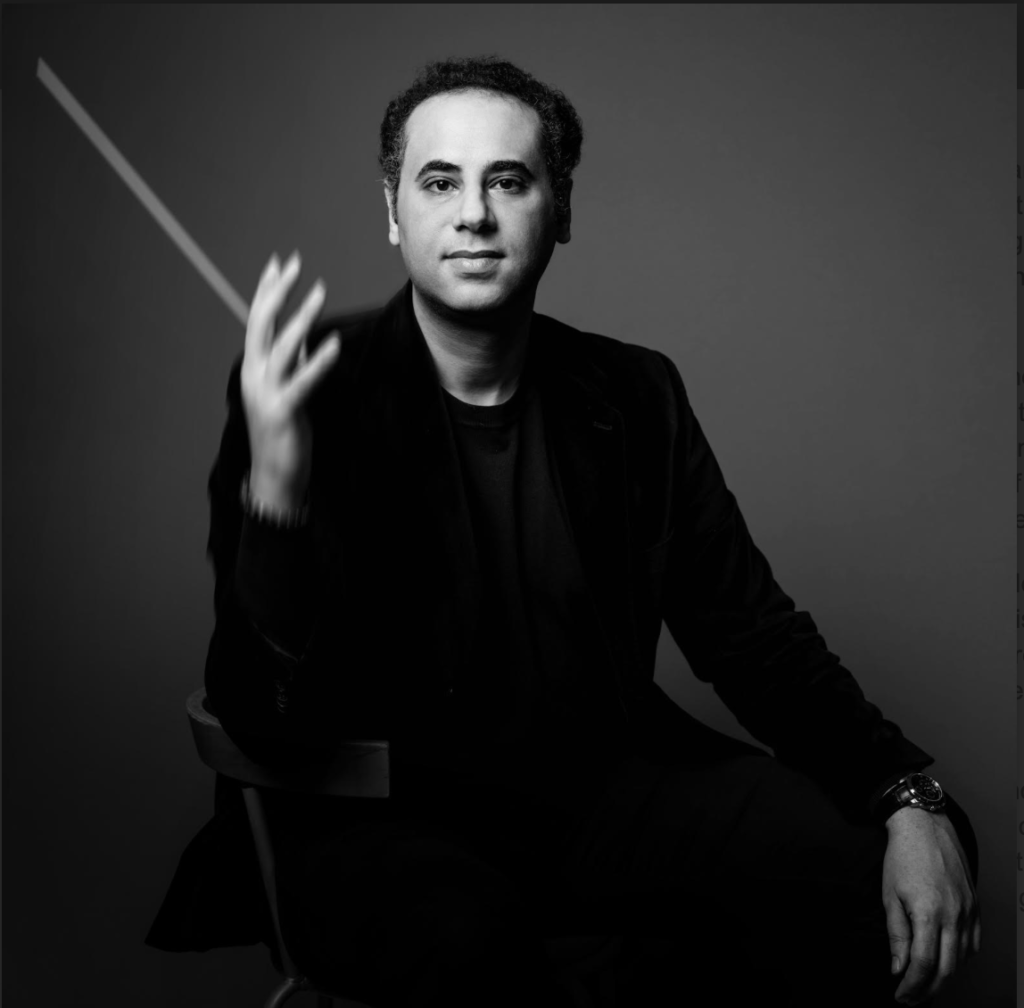
In an era where speed often overshadows reflection, composer, Sherif Dahroug–a writer, and interdisciplinary artist offers a different invitation—one to slow down, listen deeply, and rediscover the subtle relationships between sound, memory, and perception. His latest album, Nuit du Songe (“Night of the Dream”), is not simply a collection of compositions but an immersive artistic landscape shaped by poetry, philosophy, architecture, and lived experience. Drawing on an extraordinary journey that spans naval architecture, hydrodynamic engineering, and more than four decades of artistic exploration, he creates music that treats silence, resonance, and symbolism as living forces rather than decorative elements.
In this conversation, Sherif Dahroug reflects on the inspirations behind Nuit du Songe, the role of dreams and inward exile in the creative process, the influence of engineering on musical structure, and why he believes music represents the most abstract and profound form of artistic thought. Rich with reflections on beauty, memory, artistic perseverance, and the slow labor of creation, this interview offers a rare glimpse into the philosophy behind an artist whose work transcends conventional boundaries between music, literature, visual art, and philosophy.
- The title Nuit du Songe evokes dreams and introspection. What inspired this project, and what emotional journey did you hope listeners would experience from beginning to end?
Nuit du Songe began as the construction of an inner world. I first approached it through a poem, using night, flowers, wind, bells, water, colour and fragrance as materials for a landscape held in the mind. The night is a passage: a stretch of uncertain ground crossed by the artist during the long movement toward creation. The song names a distinct state of consciousness, where perception changes scale and distant elements begin to speak to one another.
The album unfolds across several connected layers. It follows the artist through errancy toward a place where a work can emerge. It also follows the work itself as it gathers weight, proportion and internal law, movement by movement, until it reaches its own form. The listener completes a third crossing. Each person enters with a different memory, a different sensitivity, a different relation to darkness and return.
I hoped the album would feel like a place seen from afar and somehow recognized, then altered through each visit. A familiar doorway may open onto a room one has never inhabited. I did not prescribe a fixed emotional sequence. I shaped an acoustic space in which emotion could arise through attention: from resonance, distance, repetition, silence, and the gradual appearance of a presence. By the end, I hope the listener carries away a wider field of perception, and a new way of inhabiting the relations between things.
- You describe the album as an inward journey rather than a conventional narrative. Why did you choose this approach, and how do you hope listeners connect with its symbolism?
I chose the form of an inward journey because the album had to grow as a world. A narrative arranges actions along a line; Nuit du Songe develops through thresholds, distances, returns, changes of light, and shifts in the listener’s sense of direction. At its centre stands the artist in a state of errancy. After a long passage, a feminine presence appears. She offers a place with its own proportions and laws, a ground on which consciousness can gather itself and begin to create. The work then undergoes the same movement: it searches, accumulates matter, discovers its internal measure, and gradually reaches its form.
The symbols belong to this world as active forces. A flower, a bell, a barque, a northern wind, a colour carried by memory: each one alters the space around it and changes the relation between what is near and what is distant. I hope the listener enters these relations through attention, bringing personal memory, desire, loss, and expectation into the acoustic field. The connection I seek is a form of orientation. The listener leaves with a slightly altered way of perceiving how things approach one another, separate, return, and become inhabitable.
- Flowers, colors, and fragrances are recurring motifs throughout the album. How did you translate these visual and sensory images into musical expression?
Flowers, colors, and fragrances entered the album as modes of perception. I approached them through their physical behavior: the opening of a form, the saturation of a field, the trace left in memory after the source has disappeared.
A flower carries a temporal structure. It folds, opens, reaches a point of exposure, then withdraws. That movement can be shaped through phrasing, register, attack, decay, and the gradual release of resonance. Color acts through density. A harmony can thicken the air around a note, shift the temperature of a passage, or alter the apparent distance between two sounds. Fragrance belongs to another order. It arrives without contour, occupies a room, and remains after the object itself is gone. I found its musical equivalent in resonance, repetition, partial recall, and in sounds that return with their identity slightly altered.
This approach is connected to a maxim that has guided much of my work: “the nearness of distant things.” Music allows distant sensory realities to occupy the same space. A bell, a breath, a piano string, a remembered color, and the image of a flower can gather around one frequency and begin to affect one another. I work inside that zone of proximity.
The process was therefore very concrete. I listened for weight, grain, duration, pressure, and distance. I asked how long a sound should remain in the room, how much silence it required around it, how a chord could behave like filtered light, and how a timbre could leave a residue in the ear. The recurring images grew from those decisions. They became structural forces inside the music, shaping its pacing, its surfaces, and its sense of space.
- The album blends piano, prepared piano, church bells, vocal textures, and hybrid instrumentation. What guided your choice of this distinctive sonic palette, and what did each element contribute to the overall vision?
The sonic palette grew out of work already in progress. I had been developing prepared-piano techniques and working with resonant objects across several earlier projects. Along that path, I collaborated with a few members of the Carmel de Montmartre, on several experimental works, including Eirene, Old Comedy!, a theatrical and musical project. Those collaborations gradually evolved into what became the Ensemble de Montmartre. Nuit du Songe continues that shared exploration.
Another important part of the album came from a long recording process with my producer, Carmen Rosetaou. We spent many sessions inside the Church of Saint-Vincent-de-Paul in Paris, recording the organ, the bells, and the building itself. We were interested in the slow movement of sound through stone, the length of the reverberation, the way a bell continues to transform after the initial strike, and the way the organ fills the architecture without erasing its silence. Those recordings became working material. I isolated frequencies, stretched resonances, layered fragments, and placed them around the piano throughout the composition.
I rarely begin with a fixed list of instruments. Each project emerges from a body of sounds, gestures, recordings, and unanswered questions accumulated over time. The instrumentation develops through contact with that material. Another room, another object on the strings, another set of recordings would have led the music in a different direction. The palette belongs to the path of the research.
Each element contributed through its acoustic behavior. The piano provided weight, attack, and a clear sense of distance between one event and the next. The prepared piano introduced friction, unstable resonance, and sounds whose origin becomes difficult to identify. The bells established a larger temporal scale. Their physical gesture lasts an instant while their spectrum continues to travel through the air. The organ expanded the harmonic field and carried the dimensions of the church into the music. The vocal textures brought breath, grain, and the pressure of a human presence close to the microphone. Hybrid instrumentation allowed these materials to circulate freely, so that an acoustic sound could acquire an electronic shadow, or a recorded resonance could begin to function as an instrument.
The symbolic dimension grew within the same process. I work with symbols as structural forces. A bell carries a long cultural memory. It measures time, gathers people, announces absence, marks thresholds. Those meanings influence duration, recurrence, silence, and spatial placement inside the composition. They participate in the architecture of the work.
The overall vision emerged from the continuous dialogue between physical sound and symbolic form. Every material had to earn its place through its weight, its resonance, its duration, and the space it created around itself.
- You dedicated Nuit du Songe to those who continue to create in solitude, displacement, or inward exile. What does that dedication mean to you personally, and why is it especially relevant today?
This dedication emerges from a long observation of how artistic work is assembled, maintained, and frequently interrupted by conditions that have little to do with the material necessity of the work itself, where creation unfolds inside rooms with low ceilings, borrowed apartments, rehearsal spaces paid by the hour, studios heated by improvised means, and stretches of time where the same fragment of music, the same line of text, the same gesture of drawing is repeated until it holds its own internal pressure without any guarantee of transmission beyond the walls that contain it.
Solitude takes shape in the body and in the environment, it settles in the distance between one city and another, in the administrative silence surrounding a project, in the slow erosion of belonging that occurs when an artist moves through institutions that do not register their presence, and it also appears as an interior condition where the work continues without external echo, where writing, painting, composing, rehearsing proceed in parallel with a world that does not open its doors, leaving the artist to maintain a practice that has no immediate place to land.
I have seen how evaluation often detaches itself from the material reality of the work, how decisions are made through filters that precede any encounter with sound, image, or text, filters that operate through name, origin, accent, skin, administrative category, and inherited assumptions about legitimacy, and these filters translate into concrete sequences of exclusion, a file that is not opened, a proposal that remains unanswered, a meeting that never takes place, a conversation that stops before the work has been allowed to exist in the room, while the artist continues to spend hours in preparation, revision, and maintenance of a practice that remains structurally exposed to indifference.
The return to the work persists through repetition that has the texture of daily labor, the opening of a score at the same hour, the adjustment of a string, the cleaning of a brush, the reactivation of a sentence that has already been written and rewritten, and this return extends across long durations where the body absorbs fatigue, where financial instability becomes part of the rhythm of production, where the passage of time does not correspond to visible progression, and where the continuity of the work depends on a form of attention that survives without confirmation.
This dedication acknowledges that continuity, the sustained effort of those who maintain a practice while carrying conditions that do not originate in the work itself, where each gesture of precision is made inside environments marked by scarcity, interruption, or displacement, and where the act of refining form, proportion, sound, or structure requires a discipline that remains intact even when recognition is absent or delayed, even when the work accumulates in silence rather than in circulation.
The relevance of this gesture becomes clearer in a fragmented world where visibility is often treated as a measure of existence, where what circulates is assumed to be what matters, while the actual construction of artistic language takes place in extended intervals outside of attention, in a world of discontinuous attention and broken continuities, in studios that remain unvisited, in notebooks that do not leave the desk, in rehearsals that are never recorded, and in these intervals the work develops its internal logic without relying on external validation, shaped instead by repetition, correction, and the slow pressure of time.
Nuit du Songe is dedicated to this sustained return, to the hand that resumes contact with the instrument after interruption, to the page that is reopened after refusal, to the body that reenters the space of work without certainty about outcome, and to those who continue to build form, sound, and language in conditions where the final shape of the work remains open, held within the act of doing itself, where persistence becomes the only stable architecture.
- Before becoming a full-time composer, you trained as a naval architect and hydrodynamic engineer. In what ways has that background influenced your approach to composition and artistic structure?
My training in naval architecture and hydrodynamic engineering taught me to think through forces, distributions, resistance, balance, and the behavior of a structure under pressure, and that way of thinking still enters my work whenever I compose, because a musical form also has to carry weight, absorb tension, redirect energy, and remain coherent while its internal conditions are changing.
In naval architecture, a form or a structure is never considered in isolation from the medium that surrounds it. A hull exists through its relation to water, velocity, displacement, gravity, turbulence, and load. A slight modification in curvature alters the movement of pressure across the surface; a change in mass affects stability; a local decision can modify the behavior of the entire structure. Composition often develops for me through the same attention to consequence. A single interval can change the balance of a passage, one resonance can pull the ear toward another register, a silence can redistribute the weight of everything that precedes it, and a transition has to be shaped according to the forces already active inside the music.
Hydrodynamics also gave me a precise sense of continuity. Water records every disturbance and carries it beyond the point where it began. A gesture produces a field of consequences: waves, vortices, drag, acceleration, loss of energy, recovery of equilibrium. I recognize a similar process in sound. An attack is brief, while its resonance continues to move through the room, enters the following phrase, alters the perception of distance, and leaves a pressure behind it even after the frequency itself has disappeared. I often compose through that residual movement, which is perhaps why I am drawn to instrumentations that can carry my ideas more directly than a fixed classical formation of instruments, listening to what a sound has displaced around it and allowing the next event to grow from that altered space.
This background also shaped my relationship to structure. I tend to build a work through systems of relation: density against openness, vertical weight against horizontal flow, accumulation against release, stability against controlled deformation. These relations are tested throughout the process. I listen for the point where a section begins to carry too much mass, where a transition loses pressure, where a register becomes saturated, where a repeated figure starts to change function because of its duration or placement. The score becomes a field in which each element affects the distribution of energy across the whole, while global structures can articulate and float with a certain degree of liberty.
There is also an ethical dimension in that discipline. Engineering requires respect for material reality. A structure cannot survive through intention alone; it has to answer to weight, friction, scale, and consequence. I bring that same demand into the studio. Every sound has to justify the space it occupies, every layer has to carry a precise function, every formal decision has to be tested through listening rather than protected by theory. The work teaches me where its limits are, where it can bend, where it needs reinforcement, and where a section must be removed because it disturbs the equilibrium of the whole. In that sense, the piece is never only a sequence of events but a reflection of its own underlying philosophy: how it treats attention, how it distributes presence, how it allows silence to function as structure rather than absence. The macro-form becomes an extension of these values, so that the way the work holds itself in time ultimately reveals the same principles that generated it.
Over time, this training has become less visible as a reference and more present as a method of attention. It guides the way I measure duration, distribute density, construct transitions, and follow the movement of sound through an acoustic space. I compose by listening to forces in motion, to the pressure between elements, to the way a form holds itself while passing through instability, and to the exact moment when structure begins to feel inevitable.
- The album was inspired by a poem you wrote during its earliest stages. How did that poem evolve into nine interconnected musical movements, and did its meaning change as the project developed?
The poem began as the first chamber of the work, a confined space where the essential images were already present in an unstable form: exile, return, distance, memory, the persistence of desire, and the figure of an artist moving through a world that has become difficult to inhabit, carrying within that movement the need to recover the work that waits somewhere beyond fatigue, interruption, and loss.
At that stage, the project was titled Ulysses, Nuit du Songe, and Ulysses gave me a concrete body through which I could think about artistic exile, since his voyage could be read as the long displacement of a creator who moves through trials, seductions, errors, storms, and delays while remaining drawn toward a place where his life and his work might once again become continuous, and the presence guiding him through that distance gradually assumed, in my imagination, the form of a goddess of art, intelligence, and proportion, a figure whose role was carried through orientation, measure, and the ability to recognize a path inside disorder.
The poem developed alongside the music, and its images began to exert pressure on the form of the album, with certain lines opening into durations, certain recurring words creating points of return, and certain silences between images producing the distances that later separated one movement from another, so the nine pieces emerged through a process of expansion in which the poem was tested through sound, divided, prolonged, compressed, and allowed to release structures that the written page had held in a more concentrated state.
As the project progressed, the figure of Ulysses gradually receded, and the deeper condition of the voyage became clearer to me, since the central material had settled in the night itself, in the altered perception produced by solitude, in the dream as a way of crossing reality, and in the artist’s movement through an inward territory where memory, fear, desire, and form remain active at the same time, so the title was reduced to Nuit du Songe, and the poem reached its final shape through that reduction, gathering around the interior passage that had been present from the beginning.
Only three pieces from the earlier version remained in the final album, including Reflets d’un nymphéa, Collier aux cloches and Souffle septentrional, while the other movements grew from the poem in its later form, and those surviving pieces carried the grain of the first architecture into the new one, like sections of stone retained inside a rebuilt structure, preserving the pressure of the initial journey while allowing the work to acquire another scale, another center, and another movement through time.
The meaning of the poem changed through this process because the work itself changed the way I understood it, and what began as the path of a named figure gradually became a wider meditation on the artist’s condition, on the distance between creation and belonging, on the long discipline required to remain close to one’s work, and on the inner night through which a form is slowly recovered, movement after movement, until the nine parts begin to function as a single passage through perception, memory, and return.
- Having studied at leading institutions in Paris and London and received more than forty international awards, how has your artistic philosophy evolved over the years, and how is that reflected in Nuit du Songe?
My artistic philosophy developed through a long negotiation between formation, expectation, and the need to hear what was already taking shape beneath the language I had been taught to use, because studying in major institutions in Paris and London placed me inside rooms where standards were precise, traditions were visible in every score and every correction, and the question of what was expected from a composer entered the work before the first note had fully settled on the page.
For a long time, I tried to understand those expectations, to identify the proportions, techniques, references, and forms of presentation through which a work becomes legible to an institution, a jury, or a professional field, while preserving the material I wanted to bring into those structures, and that effort required a constant adjustment of weight, like carrying an object through a narrow passage without damaging its surface or allowing its internal balance to collapse.
The awards gave me evidence that the work could travel, that it could enter different rooms, cross languages, and withstand the attention of people who did not know the circumstances from which it had emerged, and that recognition gradually released me from the need to ask whether the work was valid before allowing it to exist, because once a certain threshold had been crossed, the deeper task became clearer: to remove the scaffolding of expectation, to stand inside the work with fewer protections, and to accept that each new project would require its own method, its own scale, and its own form of risk.
With time, I began to understand my practice as a journey built through music, literature, visual thought, philosophy, and the physical experience of making, where every project receives what I have gathered from the previous ones while demanding that those acquisitions remain mobile, available for transformation, and capable of being abandoned when they begin to harden into habit, so the technique already present in the hand becomes a tool kept within reach rather than a route followed automatically.
I try to enter each work through a condition of fragility, close to the moment when a material has begun to exert pressure while its structure remains unresolved, when a sound has weight without yet having a function, when an image returns without explaining why, when a sentence opens a space that the music has not yet occupied, and this condition forces me to listen before deciding, to test the resistance of a form, to follow the smallest displacement in register or duration, and to allow the work to reveal the laws by which it can stand.
Nuit du Songe reflects this stage of my development because the album was built through that sustained exposure to uncertainty, with the poem, the prepared piano, the recorded bells, sonic manipulations on the organ, the voices, the church resonance, and the nine movements entering the process as materials whose relationships had to be discovered through repeated contact, so that the final architecture grew from the pressure they placed on one another rather than from a model imposed in advance.
Each project now becomes a site of instruction, a place where I learn something about my own limits, about the way memory alters perception, about the time required for a form to become necessary, about the relation between beauty and structure, and about the philosophical assumptions carried by every decision of scale, silence, repetition, and return, which means that the work changes me while I am building it and leaves behind a method that can never be used again in exactly the same way.
The institutions, the years of study, and the awards remain part of the foundation, like measurements inscribed beneath a finished structure, while the direction of the work now comes from a more exposed form of attention, from the willingness to approach each piece without certainty, to enter the studio with experience in the body and enough openness for the work to resist that experience, redirect it, and teach me what I had no language for before the first sound was made.
- Your work spans music, philosophy, literature, and visual thought. Why is it important for you to blur the boundaries between these disciplines, and how does that interdisciplinary vision enrich your music?
I have never experienced music, philosophy, literature, and visual thought as separate territories, because they enter my work through the same underlying questions: how a form begins to appear, how a relation acquires necessity, how an image remains active after it has left the eye, how memory alters the scale of an event, and how a structure can carry an idea through time without reducing it to an explanation.
Each discipline gives these questions a different material body. Music works through frequency, duration, pressure, resonance, and silence; literature gives syntax to the movement of thought and allows an image to unfold across the measured distance of a sentence; visual practice teaches the distribution of weight across a surface, the tension between a dense region and an empty one, the way a line directs attention before the mind has named what it sees; philosophy enters through the concepts embedded in every formal decision, through the way an artwork treats presence, absence, repetition, continuity, proportion, and the position of the perceiving body inside the structure.
When I compose, these materials often arrive together. A sentence may establish the rhythm of a movement before any sound has been written, a color may suggest the density of a register, an architectural proportion may determine the duration of a section, and a philosophical question may remain inside the piece as a pressure that governs its development without ever appearing as a verbal statement. Their influence is carried through concrete decisions: the length of a resonance, the distance between two attacks, the amount of air left around a voice, the recurrence of a bell, the point at which an image returns in altered form, or the moment when a musical surface becomes too saturated to receive another element.
This movement across disciplines also changes the conditions of listening, since a sound can begin to behave like an image, a repeated figure can acquire the persistence of a sentence, and a silence can function like an unpainted area that determines the balance of everything around it. I am interested in the point where these modes of perception come close enough to affect one another while each retains its own grain, resistance, and temporal scale, a principle connected to the maxim that accompanies much of my work, “the nearness of distant things.”
The interdisciplinary dimension of my practice therefore grows from the need to follow a question wherever its material demands lead, because some ideas require the pressure of a chord, others need the extension of a written phrase, the fixed edge of an image, or the slower excavation of a concept, and the work becomes richer when these forms of knowledge are allowed to enter the same workshop, to alter one another through contact, and to leave traces in the final structure.
Yet there is a further movement that underlies all of this: music remains the most abstract form of artistic thought. It does not represent, describe, or stabilize meaning in the way other media can; instead, it operates at the level where form becomes pure relation in time. For this reason, one does not arrive at music directly. One passes through language, through image, through concept, through material structure, through every available mode of reflection and expression, until these forms gradually lose their separateness and begin to dissolve into a more essential field of relations.
In this passage, each discipline functions as a threshold rather than a destination. Literature refines attention to temporal unfolding, visual practice sharpens the perception of structure without narrative, philosophy strips experience down to its conditions of possibility, and composition tests how far these elements can be transformed into pure sonic necessity. What remains at the end of this trajectory is not the disappearance of thought, but its condensation into sound itself, where thinking no longer speaks about form but becomes form in its most immediate and abstract state.
In Nuit du Songe, the poem, the instrumental writing, the recorded architecture of the church, the symbolic weight of flowers and bells, and the philosophical condition of inward exile all participate in a single field, where each element changes the scale and direction of the others, so the album can be heard as music while also carrying the pressure of a text, the distribution of a visual space, and a sustained inquiry into perception, memory, solitude, and return.
This way of working allows music to become the point of convergence where all other forms of thought are gradually transformed, until they no longer function as separate languages but as the preparatory movements of a single, ultimate abstraction: sound as pure relation, unfolding in time, and carrying within it the residue of every path that led to it.
- In a world that often feels rushed and fragmented, what message do you hope listeners take away after spending time with Nuit du Songe?
I hope the listener leaves Nuit du Songe with a renewed capacity to remain inside an experience before asking it to declare its meaning, because much of contemporary life is organized around immediate recognition, rapid judgment, and the constant movement from one surface to the next, while certain perceptions require a slower chamber in which a sound can complete its decay, an image can remain suspended without being named, and a thought can develop through its own pressure rather than through the demand for an instant conclusion.
The album asks for this duration. A bell is struck and continues to unfold after the hand has withdrawn; a piano resonance moves through the air, reaches the walls, returns with part of its spectrum altered, and enters the silence that follows; a voice appears at the edge of language, close enough to carry breath and physical grain, while remaining distant enough for the listener to inhabit its uncertainty. These sounds open a space where attention can settle, move inward, and recover the fine distinctions that disappear when experience is consumed too quickly.
I would like the listener to encounter the night in the album as a field of perception, where familiar forms lose their fixed outlines and begin to reveal other relations, where memory enters the present through a fragment of timbre, where distance becomes audible, where silence carries the residue of what has already passed, and where the imagination works without being directed toward a single image or conclusion. The dream belongs to this same field, as a mode of knowledge in which remote events, buried sensations, and incomplete thoughts are brought into proximity and allowed to form a temporary architecture.
This inward movement relates to the world outside the album, because a person who learns to remain with a fragile sound may also become more attentive to what is faint, delayed, displaced, or deprived of immediate visibility in ordinary life. This change in listening alters the way one enters a room, reads a face, receives another person’s silence, or recognizes the slow labor taking place beyond the range of public attention. Attention has a physical consequence: it gives time, creates room, and allows what is still forming to continue.
I do not expect every listener to follow the same path through the nine movements, since each person enters with a different body of memories, losses, images, and interior distances, and the work acquires another structure each time it passes through a particular consciousness. One listener may remain with the weight of the bells, another with the exposed grain of a voice, another with a silence between two piano attacks; these points of contact may continue to move long after the album has ended, like a fragrance that remains in a room after its source has been removed.
What remains is a quality of inward space, a slight widening of the interval between perception and response, a willingness to stay near what has not yet become clear, and the recognition that solitude can contain movement, that darkness can sharpen the senses, and that an unfinished thought may already carry the first measure of a form.
If Nuit du Songe leaves the listener with a different relation to time, with an ear more sensitive to resonance, distance, and silence, and with the desire to continue their own inward passage after the final sound has withdrawn, then the work will have completed its journey through them.
Listen on Spotify:
 Interview with Bei Bei–The Guzheng in the Present Moment
  Interview with Eva James–Struggle and Triumph
  Interview with Michael Whalen–Creating Music as a Mode of Self-Expression
  Interview with Ronald Van Deurzen–A Pianist Who Wears Many Hats
  Interview With Time Traveler aka Eleon–A Fresh Perspective to Electronic Music
  Interview With Christel Veraart Regarding her Newest Album: Pleiades
  Album Review—Journey
  Album Review—Aphelion
  Album Review—Surrender
  Album Review—Waiting For Today